Worshiping God takes some learning, because Worship is a learned response to God’s love.
John 4:23-24
“But a time is coming, and even now has arrived, when the true worshipers will worship the Father in spirit and truth; for such people the Father seeks to be His worshipers. 24 God is spirit, and those who worship Him must worship in spirit and truth.” (NASB).
Lesson 5: Learning to Worship in Spirit and Truth
If you can read and write, ride a bicycle, or cook, it is because someone taught you or you took the time to learn how to do it well. In similar ways, worshiping God takes some learning, because Worship is a learned response to God’s love. While you always felt a need to worship your Creator like the Athenians in Acts 17, you did not wake up knowing exactly who this God is, or how, when, and why He desires you to be saved and to worship Him.
It was when you learned from the Bible, who God is and when and how He wants you to worship and serve Him, that you finally begun to learn more correctly how to express all the feelings you were having towards God.
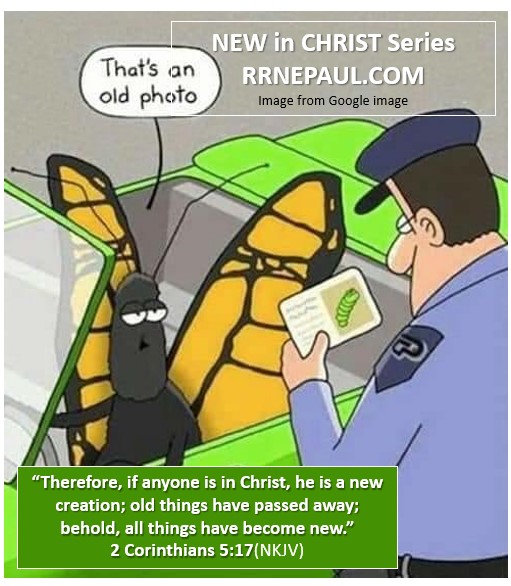
In similar ways, you will not know how to worship God in the ways that God desires, until you open the Bible and learn what the law of the New Covenant says about when and how to worship God. Remember from lesson 1, that as a new creature in Christ, you will need to relearn a number of things. Perhaps you will have to relearn what is right about morality because the world taught you to accept wrong as right. So it is with even religious things. You may need to relearn what is right worship from the ways you were taught from a previous religion, from a previous church, or even from your parents.
So in this lesson, we will begin our study of “Learning to worship in spirit and truth,” so that you can become a true worshipper of God. We will begin by looking at the basics of what it means to worship God in spirit and truth from John 4:23-24.
John 4:23-24
“But a time is coming, and even now has arrived, when the true worshipers will worship the Father in spirit and truth; for such people the Father seeks to be His worshipers. 24 God is spirit, and those who worship Him must worship in spirit and truth.” (NASB).
Let us take a look at the meanings of the words worship, spirit, truth and God. Then we will consider their relationship to becoming a true worshiper of God.
Worship means “to express in attitude or gesture one’s complete dependence on or submission to a high authority figure, (fall down and) worship, do obeisance to prostrate oneself before, do reverence to, welcome respectfully.” (William Arndt, 882).
Spirit can mean a few things. According to the Greek-English Lexicon, spirit can mean life or soul.
- Life. Breath is a sign of life, and by way of the idea of the breath of life, pneúma comes to be used for life or living creatures.
- Soul. As the principle of life, pneúma means much the same as psychḗ [translated as soul]. Bound to the body in life, it escapes it with the last breath and returns to the ethereal sphere (James 2:26, Ecclesiastes 12:7).
- In spirit therefore means to connect with God through the non-physical rational part of your being. The spirit that God gave you to bring your body of clay to life. I like to think of my spirit as the person I talk to when I think to myself or even talk to myself. I know he is there, but I can’t see or touch him. He is my consciousness. He is always concerned about my relationship with God, and He is always telling me to please God. As Jesus told the disciples, “…the spirit is willing, but the flesh is weak” (Matthew 26:41 NASB). Your spirit always wants to please God, and you will have to retrain your body to follow your spirit, even to worship.
God is deity, the Creator of heaven and earth and all things (Genesis 1). But it helps to always remember that God is Spirit. This means that God does not need to be represented by an image made with hands. It also helps to remember that when God created you, He brought you to life by blowing His spirit into you (Genesis 1:26-27). This is why we are also spirit beings.
Truth: is “that which has certainty and force” as a valid norm (with a hint of what is genuine) (Gerhard, Kittel). He also points out that “The righteous base their attitude to God on incontestable truth and practice truthfulness as God himself is truthful” (Gerhard, Kittel).
In truth therefore means to conform to what is real, genuine, and free of lies and deception. “We live in truth as well as worship according to correct doctrine or truth” (John 4:24,1 John 1:6) (Kittel).
Worship must conform to God’s truth. As the definitions show, worship is far more than expressing emotions in ways that you feel comfortable. Worship must conform to God’s truth, or what God accepts as valid “norms.” This is very important, because some religions and churches have trained the world to think that anything that makes you feel “spiritual” can be offered to God as worship. This is a spiritually dangerous way to feel about worshipping God. Because everything in life, from eating food to partaking in sensual pleasure, to driving a car, to running, makes somebody feel spiritual.
Under the first covenant with the Jews, the Law of that covenant, the Law of Moses, specified what the accepted worship norms were. Take some time to read anywhere between Exodus 25 to Leviticus 25 and you will see the “truth” of when and how the Jews were commanded to worship God. (Joshua 24:14, Isaiah 1:10-17). The Jews needed to worship God sincerely in specific ways. They needed to worship God in their human spirits through the physical forms of worship that God authorized. But throughout their history, many of them wanted to “feel” more spiritual, so they tried to adopt the worship norms of idolatry into the worship of God, not fully realizing why they wanted to do that, was because they wanted to follow what makes them feel good about doing what pleases themselves and not God.
Where can I find the truth for worship today? Recall from lesson one, that Jesus commanded the Apostles to teach all those who were baptized, all the things that they would need to observe (Matthew 28:20). And again, as we had discussed in lesson four, that the law of the New Covenant in Christ is called the Apostles’ Doctrine or the teachings of the Apostles. And the 3000 souls who were baptized on the day of Pentecost “continually devoted themselves to the apostles’ teachings” (Acts 2:42 NASB).
After learning what to do to be saved, and after becoming Christians, all the Jewish new coverts and the pagan new converts in the first century, had to relearn how to worship God the right way, differently from how they used to worship God or their gods. So please do not feel intimidated when you sit with your new church family and things feel a bit strange or different. Afterall, you are new in Christ, and as a newborn, you will have teething pains and you will feel uncomfortable as you seek to grow in Christ, and as you seek to become a true worshiper.
Again, Jesus says: John 4:23-24 “But a time is coming, and even now has arrived, when the true worshipers will worship the Father in spirit and truth; for such people the Father seeks to be His worshipers. 24 God is spirit, and those who worship Him must worship in spirit and truth.” (NASB).
In our next lesson, we will begin our step by step study of when and how the first Christians worshiped God “in spirit and truth,” so that you can also learn how to worship God “in spirit and truth.”
Until next time, keep reading, keep praying, and keep learning and growing in Christ.
Works Cited
Gerhard Kittel, Gerhard Friedrich, and Geoffrey William Bromiley, Theological Dictionary of the New Testament, Abridged in One Volume (Grand Rapids, MI: W.B. Eerdmans, 1985), 876.
William Arndt et al., A Greek-English Lexicon of the New Testament and Other Early Christian Literature (Chicago: University of Chicago Press, 2000), 882.
(c) Richard Nepaul 2023
 RICHARD NEPAUL
2 thoughts on “Lesson 5: Learning to Worship in Spirit & Truth”